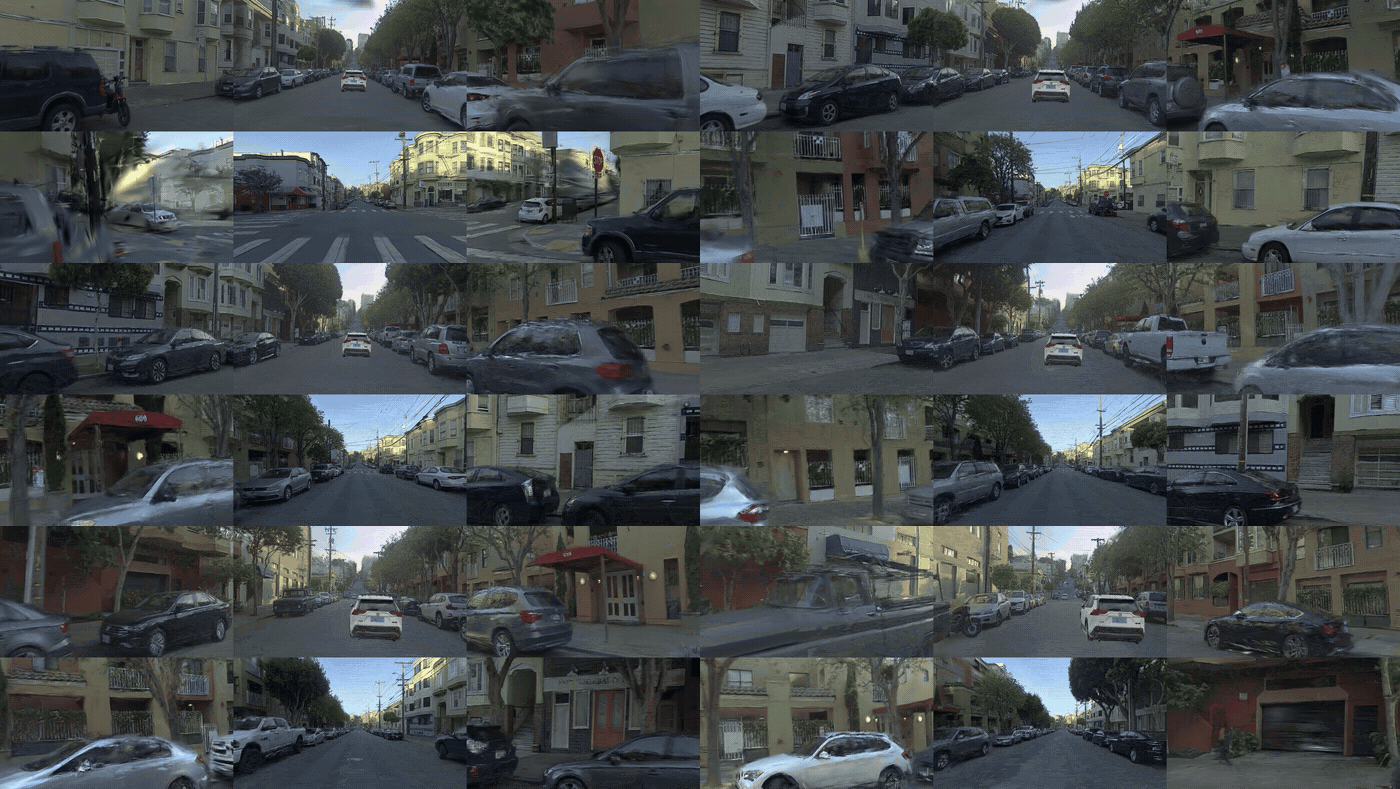


Visual Representation Alignment / October 2026

Do Better Visual Representations
Always Lead to Better
End-to-End Autonomous Driving?

Visual representation alignment improves driving.
Its benefits depend on the target—and the supervision.

Southeast University logo1 Southeast University
The University of Hong Kong logo2 OpenDriveLab at The University of Hong Kong
Shenzhen Loop Area Institute logo3 Shenzhen Loop Area Institute

‡ Corresponding authors.Primary contact: [email protected]

ViRA-Diffusion92.3 EPDMSNAVSIM v2 · navtest
Challenging scenarios+16.4 ptsRap* with ViRA · navhard
Training-time alignment0 added costAt inference · original planner retained

From visual representations
to driving performance.

A controlled look at what foundation models bring to end-to-end planners—and when their differences matter.

FIG. 01One interface, three empirical findings. ViRA aligns planner features with a frozen visual foundation model during training. The deployed planner architecture and inference cost stay unchanged.

Abstract

Visual foundation models (VFMs) are increasingly integrated into end-to-end autonomous driving for their powerful representations, yet it remains unclear when these representations improve driving performance. To investigate this question, we introduce ViRA, a planner-agnostic visual representation alignment framework that keeps the planner architecture and inference cost unchanged.

Our study reveals three findings: (1) VFM-guided visual representations consistently improve driving performance across diverse end-to-end planners, with gains extending to zero-shot closed-loop evaluation. (2) The choice of VFM target matters for planning performance, and alignment to a different VFM can further benefit planners with pre-trained VFM encoders. (3) Auxiliary perception supervision reduces sensitivity to VFM target selection, narrowing the EPDMS spread across five targets from 2.7 to 0.5 points and potentially compensating for less effective VFM targets.

Guided by these findings, we develop ViRA-Diffusion, a diffusion-based planner trained without auxiliary perception supervision, which achieves 92.3 EPDMS on NAVSIM v2 navtest, outperforming recent methods in our comparison by at least 1.9 points. The results motivate jointly considering target selection and planner supervision when integrating VFMs into end-to-end autonomous driving.

Different planners.
Consistent overall gains.

Regression, diffusion and scoring planners all benefit from VFM-guided alignment in our evaluations. The gains extend to zero-shot closed-loop simulation.

With ViRA ↑ Higher is better

NAVSIM v2 · navtest

Camera-only evaluation · standard driving scenarios

Non-reactive simulation
NAVSIM v2 navtest performance
MethodNC ↑DAC ↑DDC ↑TLC ↑EP ↑TTC ↑LK ↑HC ↑EC ↑EPDMS ↑
Human Agent10010099.810097.810010098.190.197.9
Perception-based
TransFuser97.189.699.099.897.995.995.998.387.383.6
TransFuser-ViRA97.794.199.599.898.296.796.898.387.989.0+5.4
DiffusionDrive98.295.999.499.887.597.396.898.387.784.5
DiffusionDrive-ViRA98.296.599.699.898.297.497.498.388.091.9+7.4
Perception-free
Rap*91.688.893.599.887.292.590.997.256.772.8
Rap*-ViRA97.196.999.299.987.596.996.297.748.183.7+10.9

All methods use camera inputs without LiDAR. Rap* is our reimplementation with a different backbone and without the original data augmentation. DiffusionDrive-ViRA (91.9) and ViRA-Diffusion (92.3) are distinct configurations.

Scroll the table horizontally to explore all metrics ↔

Representation space
FIG. 02The t-SNE visualization suggests a shift of planner representations toward the reference VFM.
Performance & efficiency
FIG. 03Alignment improves planning while preserving each planner’s inference cost. Bubble area represents model parameters.

The target matters.
So does the supervision.

The benefits of visual representations depend on how the planner is trained. Two experiments reveal why target selection deserves a closer look.

Finding 02 / Target selection

Different foundations,
different driving gains.

VFM targets yield different planning gains for the same planner. Even a planner with a pre-trained VFM encoder can benefit from alignment to another target.

83.8→86.3

Rap* with a DINOv3 encoder
+ VGGT alignment · NAVSIM v2 navtest EPDMS
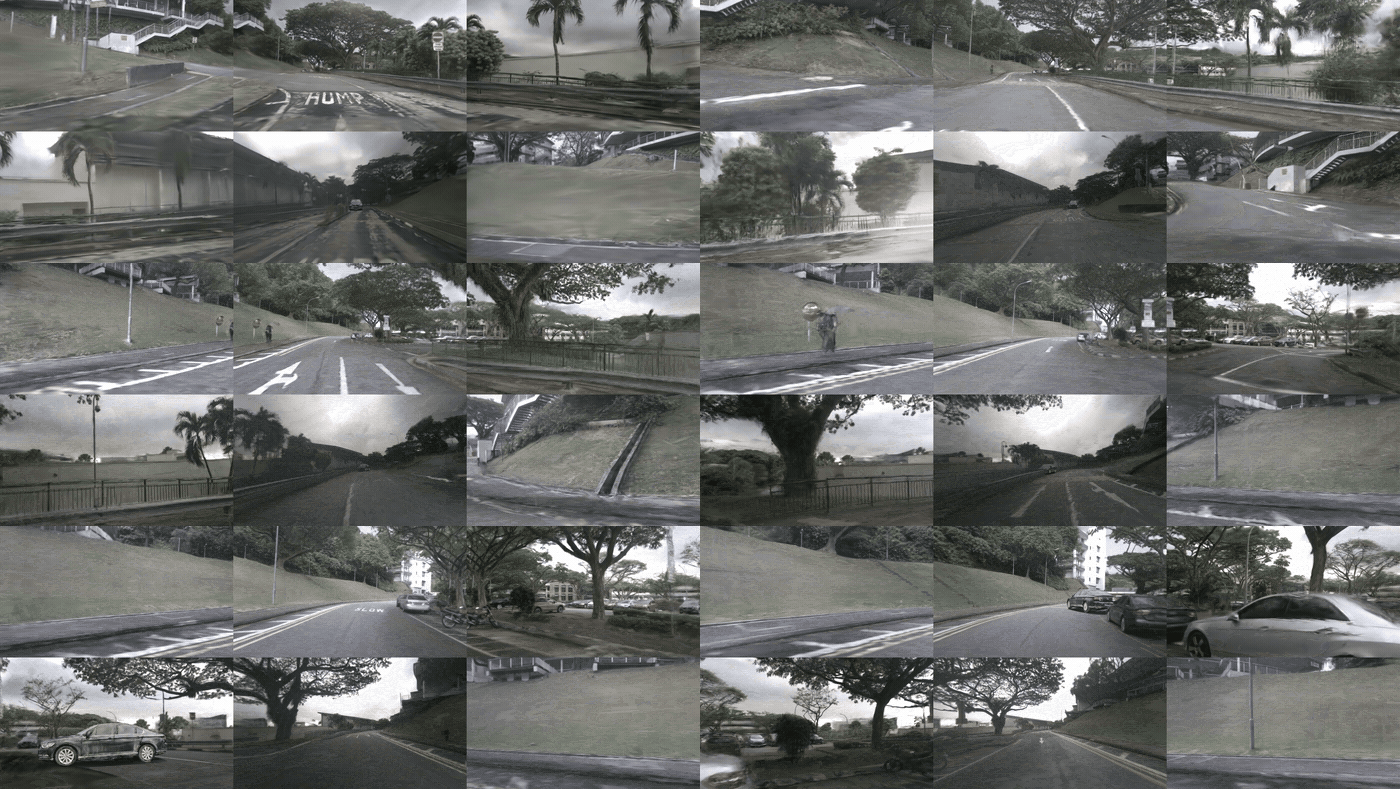
FIG. 04Comparing VFM targets across planner architectures and supervision settings.
Finding 03 / Auxiliary supervision

Supervision changes
target sensitivity.

For TransFuser, auxiliary perception supervision narrows the EPDMS spread across the same five VFM targets. Without it, the choice of target has a larger effect on planning.

2.7Without auxiliary supervision
→
0.5With auxiliary supervision
EPDMS spread across five targets
FIG. 05Matched TransFuser experiments show reduced sensitivity to VFM target selection with auxiliary perception supervision.
Putting the findings into practice

ViRA-Diffusion

A diffusion planner aligned to DINOv3, trained without auxiliary perception supervision. It exceeds the recent methods in our paper’s comparison by at least 1.9 EPDMS points on NAVSIM v2 navtest.

Explore the configuration
92.3EPDMSNAVSIM v2 · navtest

Better perception.
Better planned trajectories.

Qualitative comparisons on NAVSIM and zero-shot driving rollouts in HUGSIM complement the quantitative results.

FIG. 06NAVSIM. Qualitative examples of perception and planning with ViRA.

HUGSIM in motion

Zero-shot · closed-loop simulation
Rollout 01
HUGSIM closed-loop driving comparison, rollout 1
Planner comparisons in a photorealistic closed-loop environment.
Rollout 02
HUGSIM closed-loop driving comparison, rollout 2
NAVSIM-trained planners evaluated without HUGSIM fine-tuning.

Citation

If you find this work useful for your research, please consider citing our paper.

BibTeX / arXiv:2610.09695
@article{zhang2026vira,
  title   = {Do Better Visual Representations Always Lead to Better End-to-End Autonomous Driving?},
  author  = {Zhang, Zihao and Tian, Haochen and Li, Tianyu and Jing, Changhui and He, Jingliang and Ye, Naisheng and Pu, Ziyuan and Yang, Zhenjie},
  journal = {arXiv preprint arXiv:2610.09695},
  year    = {2026},
  url     = {https://arxiv.org/abs/2610.09695}
}
Figure