

From Labs to Life: Embodied Intelligence in the Wild
CVPR 2026 Workshop
Four Seasons 1, June 03, Denver, USA
Embodied intelligence brings us closer to creating robots that can truly see, think, and act in the real world. Yet, today's systems remain fragile, struggling to handle the complexity of the real world. This workshop looks ahead - toward generalizable embodied intelligence that thrives beyond the lab. By gathering pioneers from vision and robotics, the workshop seeks to identify key challenges, discuss interdisciplinary solutions, and chart promising directions for advancing embodied systems to everyday life.
If you are interested in our workshop, please mark the workshop in your CVPR registration, to have enough space for the workshop room.
 Join Discord to chat with the organizers.
Topics of Interest
We welcome works on a wide range of topics, including but not limited to:
- Visual generalization for embodied systems, including manipulation, locomotion, etc.
- Vision-based perception and understanding.
- Generalization, robustness, and safety in real-world settings.
- Cross-embodiment transfer and hardware-agnostic policies.
- Real-world deployment of embodied agents.
- Benchmarking and evaluating embodied intelligence in the wild.
Guidelines
- All papers must be submitted through OpenReview.
- Submissions must strictly adhere to the CVPR 2026 Author Guidelines in terms of potential ethics issues and potential risks of negative social impacts.
- Manuscripts are limited to eight pages (excluding references) using the CVPR 2026 submission template.
- To facilitate double-blind review, all manuscripts must be fully anonymized.
- Accepted papers will be formally published in the CVPR 2026 Workshop Proceedings.
- Exceptional submissions will be considered for Best Paper Award and Spotlight Presentations.
Timeline
For any potential ambiguities, please refer to OpenReview.
- Submission start: February 10, 2026
- Submission end: March 10, 2026
- Notification: March 21, 2026
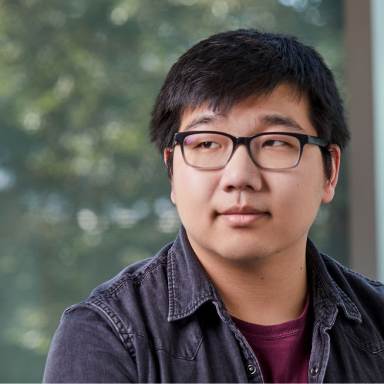
- Opening RemarksHaochen Tian9:00 AM
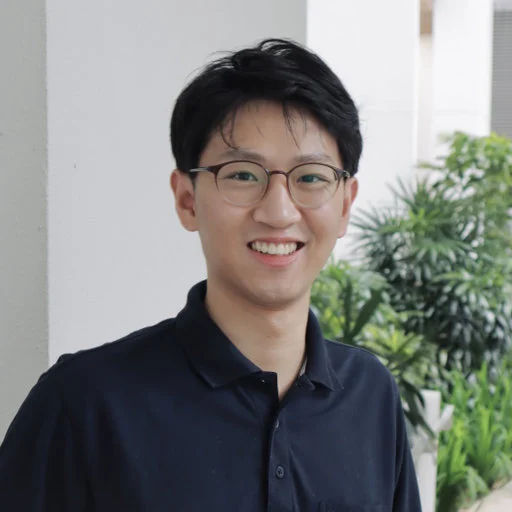
OpenDriveLab, China  The Illusion of Physical UnderstandingHao Su9:10 AM
Fudan University, ChinaBiography
Hao Su is an Associate Professor of Computer Science at the University of California, San Diego (UCSD), and also serves as the Founder and Chief Technology Officer of Hillbot, an intelligent robotics startup. At UCSD, he is the Director of the Embodied Intelligence Laboratory, a founding member of the Halıcıoğlu Data Science Institute, and a member of the Center for Visual Computing and the Contextual Robotics Institute. His research focuses on developing algorithms to simulate, understand, and interact with the physical world. His interests span computer vision, machine learning, computer graphics, and robotics, with extensive publications and teaching experience in these fields. Su obtained his Ph.D. in Computer Science from Stanford University. Prior to that, he received his Ph.D. in Mathematics from Beihang University. At Stanford and UCSD, he developed widely-used datasets and software, such as ImageNet, ShapeNet, PointNet, PartNet, SAPIEN, and the recent ManiSkill. These works have greatly advanced research progress in areas such as 3D vision and robot manipulation. He also developed new courses to promote the application of machine learning methods in 3D vision and embodied intelligence. Su serves as the Program Chair of CVPR 2025. He has also served as an Area Chair or Associate Editor for top conferences and journals in computer vision (ICCV/ECCV/CVPR), computer graphics (SIGGRAPH/ToG), robotics (IROS/ICRA), and machine learning (NeurIPS/ICLR). He has been awarded the SIGGRAPH Best Doctoral Dissertation Honorable Mention and the NSF CAREER Award.
- 10:00 AMAccepted Paper Authors
- Coffee Break10:20 AM
 nuReasoning: Advancing Reasoning-Centric Autonomous Driving for Long-Tail ScenariosZhiyu Huang10:30 AM
UCLA, USABiography
Zhiyu Huang is currently a postdoctoral scholar at the UCLA Mobility Lab, working under the guidance of Prof. Jiaqi Ma. Previously, he was a research intern at the NVIDIA Research Autonomous Vehicle Group and a visiting student researcher at UC Berkeley in the Mechanical Systems Control (MSC) Lab. He earned his Ph.D. from Nanyang Technological University (NTU), where he conducted research in the Automated Driving and Human-Machine System (AutoMan) Lab under the supervision of Prof. Chen Lyu. His research lies at the intersection of robotics, mobility, and artificial intelligence. He focus on developing algorithms and techniques that enable physical AI agents to perceive their environment, interact with humans, and make intelligent decisions. His research interests include deep learning, reinforcement learning, and generative AI, with applications in perception, prediction, decision-making, and simulation for embodied AI, autonomous driving, and human-machine interaction. To date, he has authored over 30 papers published in leading journals and conferences in AI, ITS, and robotics.
 World Motion Model, from 4D Vision to Robotics and BeyondJiahui Lei11:20 AM
UC Berkeley, USABiography
Jiahui Lei is a post-doc researcher at UC Berkeley. Working with Prof. Angjoo Kanazawa and Prof. Trevor Darrell. Today he is focusing on 4D Vision for Robotics. Previously, he worked on 4D as well as equivariant neural networks. He pursue inspiring, useful, and elegant research on hard problems. He believe researchers are defined by their questions and their tastes. He obtained his Ph.D (2020-2025) at University of Pennsylvania GRASP Lab advised by Prof. Kostas Daniilidis. He was a student researcher at Google DeepMind with Prof. Leo Guibas, and received my bachelor's degree (2016-2020) in Automation (Control Science) with ranking 1st/141, the class of 2020, Zhejiang University. Before he studied at Dalian No.24 High School.
- Lunch Break12:10 PM
 Embodied Intelligence with World ModelsYilun Du1:50 PM
Harvard, USABiography
Yilun Du is an Assistant Professor at Harvard in the Kempner Institute and CS. He received his PhD at MIT EECS, advised by Prof. Leslie Kaelbling, Prof. Tomas Lozano-Perez and Prof. Joshua B. Tenenbaum. Previously, he also obtained his bachelor's degree from MIT, was a research fellow at OpenAI, a senior research scientist at Google Deepmind, and got a gold medal at the International Biology Olympiad. His research focuses on generative models, decision making, robot learning, embodied agents, and the applications of such tools to scientific domains. His research is driven by the goal of developing AI agents that interact in the physical world, focusing on generative AI as a toolbox for solving such problems. A unique challenge in applying generative AI in this setting is the lack of available decision-making data and the necessity to generalize well to previously unseen situations. His work addresses this by proposing compositional generative modeling, where simple generative models are learned and composed together to construct complex generative models that generalize beyond the narrow amount of available data. His work has illustrated how such compositionality solves various problems in constructing AI agents ranging from complex scene understanding, trajectory planning, multimodal perception, and hierarchical planning. His work has further shown how such developed techniques can be broadly applied to settings in sciences and engineering.
- Coffee Break2:40 PM
 Mobilizing and Deforming: Advancements in Mobile Manipulation, Sensing, and Shape AdaptationRika Antonova2:50 PM
Cambridge, UKBiography
Rika Antonova is an Associate Professor at the University of Cambridge, leading the Cambridge Resilient Autonomous Learning (CamRAL) Lab. She is currently looking for talented mechanical engineers / postdocs for a project on novel robot hardware design. While her recent work focused on robotics, she is also returning to her long-term interest in reinforcement learning algorithms, so she is enthusiastic about collaborations in data-efficient RL, active learning & exploratio, and decision-making for scientific & environmental domains as well. She is also teaching an RL course at Cambridge. Previously, she was at Stanford University upon receiving the NSF/CRA Computing Innovation Fellowship, and worked with the Interactive Perception and Robot Learning Lab at Stanford led by Jeannette Bohg. She completed her PhD work on data-efficient simulation-to-reality transfer at KTH (Sweden) in the group led by Danica Kragic. She also had the opportunity to intern at NVIDIA Robotics (Seattle, USA) and Microsoft Research (Cambridge, UK).
 Should Embodied Intelligence Care About 3D?Jiatao Gu3:40 PM
UPenn, USABiography
Jiatao Gu is an Assistant Professor in the Department of CIS at the University of Pennsylvania. He also works part-time as a Staff Research Scientist at Apple (MLR) and has been a full-time researcher since 2022. Prior to joining Apple, he was a Research Scientist at Meta AI (FAIR Labs). He obtained his Ph.D. degree at the department of Electrical and Electronic Engineering, University of Hong Kong in 2018 and he was supervised by Prof. Victor O.K. Li. His doctoral work explored efficient neural machine translation systems. He also spent a wonderful time visiting the CILVR Lab, New York University working with Prof. Kyunghyun Cho. Before that, he obtained his Bachelor’s degree at the Electronic Engineering Department, Tsinghua University in 2014.
- DebateSpeakers and Organizers4:30 PM
- Closing Remarks5:30 PM