Handheld paradigms offer an efficient and intuitive way for collecting large-scale demonstrations of robot manipulation. However, achieving contact-rich bimanual manipulation through these methods remains a pivotal challenge, which is substantially hindered by hardware adaptability and data efficacy.
To bridge these gaps, we introduce BiTacMan, a visuo-tactile data engine for bimanual contact-rich manipulation, which integrates hardware, acquisition strategy, and policy learning into a closed-loop framework.
- 1
A human-machine interface that supports a dual-mode pipeline with sub-millimeter MoCap and VR-based in-the-wild acquisition, and can rapidly adapt to heterogeneous grippers.
- 2
A data collection recipe that incorporates real-time validation during collection and organizes heterogeneous multimodal data into a pyramid-structured regime for staged learning.
- 3
A closed-loop data flywheel that leverages AR-based teleoperation with tactile feedback (BiTacAR) to refine policies using corrective data from realistic failures.
To balance data quality and environmental diversity, we implement a dual-mode acquisition pipeline:
•A precision mode leveraging motion capture for high-fidelity demonstrations (sub-millimeter accuracy).
•A portable mode utilizing VR-based tracking for in-the-wild acquisition and AR-based tactile-visualized recovery teleoperation (BiTacAR).
Dive into our 💡interactive 3D model viewer and explore the most popular native 3D formats with ease.
Try out the 🖱️move command to inspect internal structures.
It's more than just viewing — it's a hands-on exploration. Start 💫discovering now!
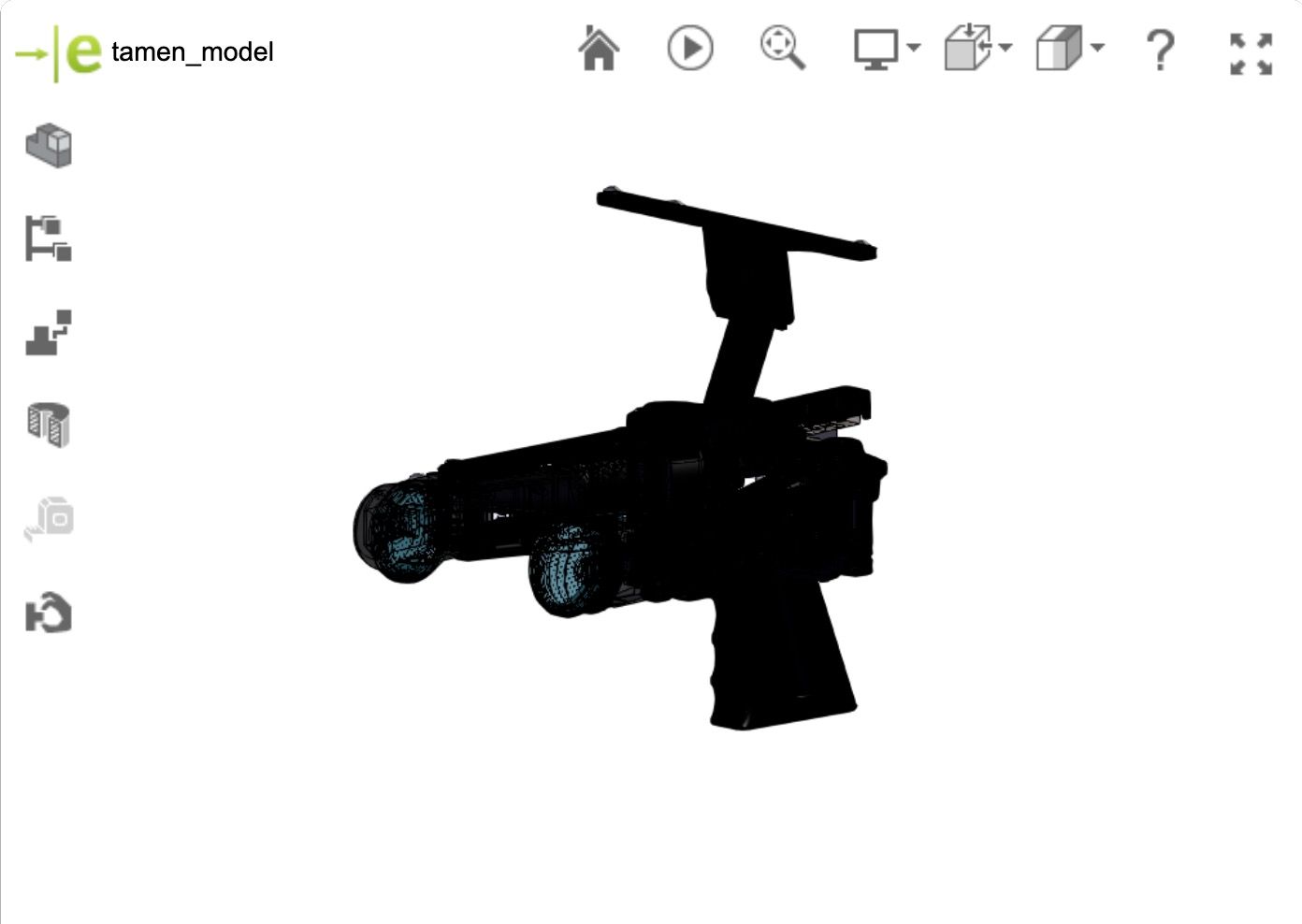
Enter 💡design inputs for link length, axis distance, and the target maximum opening.
Click calculate, then drag the 🖱️slider to watch the mechanism move and the opening curve update.
Export the 💫design result and adapt one gripper interface across different hardware.
Policies trained on demonstrations collected with the adapted interface successfully perform bimanual tasks on the target grippers.
Bimanual Handover
Delicate Grasping
Success rate (%) on target grippers after interface adaptation.
We evaluate the effectiveness of BiTacMan system through a diverse set of contact-rich manipulation tasks. Experiments show that the proposed closed-loop visuo-tactile learning framework increases the average task success rate from 34% to 75% across diverse bimanual manipulation tasks.
The robot cooperatively manipulates a flexible sheet to lift the herbs and pour them into a target container. Successful execution requires stable bimanual coordination, careful handling of the deformable support, and precise control of tilting and release.
Policy success rates across contact-rich tasks in laboratory and real-world environments. Env. denotes environment; Lab. and Wild denote laboratory and in-the-wild settings, respectively.
Herbal Transfer
Cable Mounting
Binder Clip Removal
Dish Washing
Policy success rates (%) across contact-rich tasks in laboratory and real-world environments.
Tactile pretraining and recovery data improve policy transfer across object variations and substantially improve robustness when visual perception is degraded, especially during contact-rich execution.
RobustnessCable Mounting(Full-Disturbance)
RobustnessCable Mounting(Post-Grasp Disturbance)
GeneralizationCable Mounting
GeneralizationBinder Clip Removal
GeneralizationHerbal Transfer
GeneralizationHerbal Transfer(Unseen Objects + Unseen Textures)
GeneralizationCable Mounting(Unseen Objects + Unseen Textures)
GeneralizationBinder Clip Removal(Unseen Objects + Unseen Textures)
GeneralizationDish Washing(Unseen Objects + Unseen Textures)
RobustnessHerbal Transfer(Post-Grasp Disturbance)
Visuo-tactile learning with tactile pretraining and DAgger significantly improves performance on unseen objects.
Success rates (%) of Ours (+ Pretrain) under unseen objects, and unseen objects with unseen textures. Whole-task rates are shown.
Tactile pretrain and DAgger improve robustness in contact-rich stages.
Introducing BiTacMan, a Tactile-Aware Manipulation Engine for closed-loop data collection in contact-rich bimanual tasks, which builds upon the UMI paradigm with key enhancements in multimodality, precision-portability synergy, replayability, and data flywheel.
(a) Wearable visuo-tactile interface captures rich multimodal data while breaking the precision-portability trade-off through a dual-mode pipeline that fast switches between MoCap and VR-based tracking.
(b) Online feasibility checking ensures demonstrations are reliably replayable on robot. All data are unified into a pyramid for efficient staged learning across generalization, coordination, and failure recovery.
(c) BiTacAR, our AR-based teleoperation system, helps collect recovery data with tactile feedback during policy execution and feeds them back into the pyramid for continuous policy refinement.